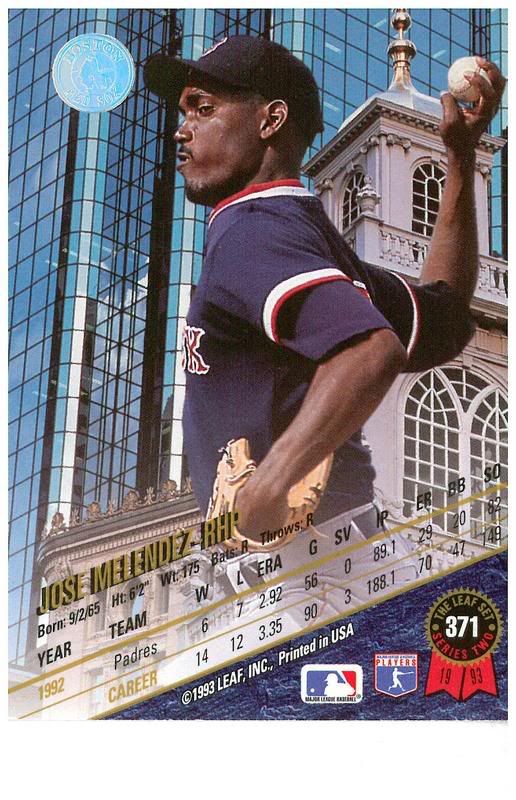
It’s time for Jose Melendez’s KEYS TO THE GAME.
1. There is an old and prophetic saying in Uganda, in much of the Great Lakes region of Africa really, that is worth recalling in this, our darkest hour. Well, a dark hour anyway
“I will beat you.”
It is not a threat per se; it is a guarantee. It is an expression of certainty that the future is written.
What does a teacher say to a misbehaving student?
“I will beat you.”
What does a husband say to the man he has caught in bed with his wife?
“I will beat you.”
What does a humble social worker say to the family of a neighbor who has stolen from him as soon as he is absolutely certain that the thief, who might fight back, is nowhere in sight?
“I will beat you.” Well, not the family, the guy.
And what do the Red Sox say to the Yankees?
For eight games this season, it was “I will beat you,” but now for three games, who knows what they are saying?
“You can beat us now?”
“Please sirs, we can’t bear another thrashing?”
“I might beat you?”
“I will attempt to beat you?”
Whatever they are saying, it is not working.
Allow Jose to illustrate. Consider the story of a man who is sleeping with another man’s wife in the marital bed. The cuckolded husband returns unexpectedly to discover the indiscretion, and what does he do? Does he allow the fight to go on for hours without anyone scoring a blow? Does he concede defeat to a giant fat adulterer attempting to look skinny by wearing pinstripes? No, he declares simply, in cold and righteous anger, “I will beat you.” And then he does.
It is that simple. It is that brutal.
I will beat you.
I will beat you.
2. Among the difficulties of traveling to distant lands during the baseball season is getting the news of the day in the form of news of the month. For instance, Jose completely missed the Adam LaRoche era. Jose learned that the Red Sox had both acquired and dealt LaRoche at pretty much the same time. In a way, it’s like getting asked out on a first date and told there will not be a second at the simultaneously.
In the normal dating process, a couple (note: or more if you roll that way) starts by agreeing to go out on a date. Then each person gets nervous and maybe even a little giddy with anticipation. Each thinks about what to say, what to wear and where things might go. They have dinner or a drink perhaps take in a film and chat about whatever interests them. Then at the end of the evening, or perhaps even a few days after, they make independent decisions about whether the date was good enough to repeat. If both agree, then they proceed towards a future of some kind, but if even one rejects the premise of a second date, that’s all there is. You know, unless one of them is all stalkery.
But in the case of Adam LaRoche, for Jose it was like a date where a lady tells him even before the first sip of wine or bite of food, hell, as soon as the date is set, that it isn’t going to work. There’s no anticipation, no pleasant tingle, not even the chance for the exhilaration of success or the heartbreak of rejection. And what’s the fun of that? Oh that’s right, Jose didn’t have to watch Adam LaRoche take at bats for a team that is allegedly trying to contend. Very good.
3. Goma, Congo is a mad city. The streets are petrified rivers of lava, the houses are shanties of mud and tin and gorillas and guerillas dance cautiously on the side of a volcano. All of them, ape and man, terrorist and soldier, corrupt border guard and… other corrupt border guard live in fear that one day, one day soon, the conflicts and trials of life may be made irrelevant by a rain of molten rock.
Yet in this most hopeless of places, one man knows hope. Amidst the dust and debris, the chaos and the corruption, Jose saw a man brandishing a symbol of hope, a sign of all that is great and good. It was not a cross, begging the Lord for mercy, the Cross has done the Congolese little good. Nor was it the pale blue of the nations that are hardly united. Rather, it was a tattered blue T-shirt with the number 45 etched in fading red. Martinez, it read on the back. Martinez.
In this sad and struggling land, there was a reminder of something good, something decent in the world. Yes, there was a nice hospital and some good social programs, but damn it, this was a Pedro Martinez shirt, a symbol of all that was once good and can be again. And right then, just after he learned that $10 when given to a border guard can inoculate against yellow fever without an injection and just before a Congolese man decided to show Jose his penis, that shirt gave Jose just a little bit of hope for the Congo.
On the other hand, the Edgar Renteria Red Sox shirt Jose saw in Uganda signaled that the land of the crested crane is pretty much doomed.
I’m Jose Melendez, and those are my KEYS TO THE GAME.
Saturday, August 8

Saturday, July 18
We Are So Happy
I am deeply suspicious of people who sing about being happy. They are, as a rule, either liars or scoundrels. It’s not that I doubt that there are people who are truly happy in this world, I’m often one of them, but I am skeptical that the people who are truly happy are singing about it, and I am certain that they are not singing well about it.
While most of these joyful minstrels are liars, some of them, the ones who actually are happy, are just jerks. If one is genuinely happy and feels the need to express it in lyrics over a snappy beat, how can he be anything but a jerk?
Things are great for you? That’s terrific. It really is, but have you looked around at the world lately? To a lot of people, maybe to most people, the world is a kind of rotten place. Sure there are flowers, but flowers cause sneezing; there is love but love leads to heartache. And those are just the things with an upside. There are a whole host of other clouds that have linings made of soot. Try finding the upside of hunger, war, poverty or Dave Matthews fans. Singing about how happy you are floating on your cloud of good fortune is to giving a swift kick in the kidneys to the rest of us who are mired in the mud of this fallen world. Please, be happy. It’s good to be happy. Just don’t put it to music and play it on a boom box on the subway.
Besides, the jerks’ music is lousy. Happy people don’t write good music. The good stuff comes from liars. Good music comes from negative emotions: pain, resentment or even just plain melancholy. The creative process is a way to deal with negativity and struggle and to, if not overcome them, at least manage them. To a creative soul happiness only comes, if it ever comes, after laying down a nasty 12 bar blues. So if you hear a catchy song about happiness, rest assured that the singer, no matter what he says, is at least miserable as you and probably more so.
This is a good theory on happy music. It is functional—it denigrates people who are happier than me as musical incompetents; it is logical—it explains why the evangelicals, who are so happy to have been born again, are so utterly incapable of producing decent rock; and it is coherent—I have yet to find any music that seriously challenges the findings. Happy music is either heartfelt, bad and preformed by an SOB, or good, insincere and performed by a secretly tortured soul.
Until yesterday, I had not found anything to undermine my theory, but as we all learned from Annie, orphans have a way of derailing the best-laid plans.
The orphans kept singing “We are so happy” over and over again. For my theory to hold, these orphans either needed to be either unhappy or dreadful singers and awful people. They were clearly good people and competent singers, which means that for my theory to hold, they had to be deeply unhappy. And here’s where we run in trouble. These kids were genuinely happy. I can smell phony a mile away. I’m like Holden Caufield without the pretension or stupid name, and I didn’t smell it on these kids.
By all rights they shouldn’t have been happy. The kids at Providence House, a rehab and vocational training facility in Nkokonjeru, Uganda run by the Little Sisters of St. Francis, had every right to be miserable. On paper, they should have been perfect candidates for a Sally Struthers commercial, little urchins with flies in their eyes. Yet there they were singing.
“We are so happy.”
The lucky ones were just orphans, healthy young people who’s parents had succumbed to the misfortunes that plague an impoverished people. Others would have been lucky to be orphans. Their parents had sold them for use in witchcraft and their bodies bore the scars of the occult. Still more suffered from heads swollen by hydrocephaly, legs shriveled by polio or minds hobbled by retardation.
“We are so happy.”
They meant it.
These kids had lost the birth lottery. Born in a poor country, with poor health care to poor families, they were destined for lives of misery and hardship. But somewhere along the line there was a second lottery, and their tickets came out winners. In the rough heart of a rough continent, somehow they had found a place for them, a good place.
It is a place where the priest says mass to the thump of African drums. It is a place where the sweet smell of baking bread and the sour stench of the piggery combine to form the piquant bouquet of schemes to keep just enough money rolling in. It is a place where children who have no one can have, at least, each other. It is a place, where, contrary to everything I have postulated, decent, happy people can sing decent, happy songs.
The nuns call it Providence House because the funding plan relies heavily on divine providence. While the sisters follow the biblical dictum that God helps those who help themselves by planting gardens and teaching trades, they have a quiet confidence that when the red ink turns a deeper crimson, God will provide.
And so he does.
I am not a religious man. I do not believe in divine intervention in mortal affairs, destiny, or that good will always triumph over evil. I believe in coincidence, chance and, sadly, entropy.
Providence House is testing my lack of faith.
My parents, currently the only people gainfully employed in my family, asked me to make a donation to some worthy cause in my little Ugandan town on their behalf. At the recommendation of the local Peace Corps contingent, I settled on Providence.
When I went to make the transaction, Sister Juliet a warm, bespectacled nun, could not, having met me only briefly before, remember my name.
“You are called… Richard,” she said, uncertainly.
I am not called Richard.
My father, one source of the donation, however, is. It was as though Sister Juliet had seen through the medium to the source. It wasn’t as dramatic as if she had accidentally called me Susan, my mother’s name, but it remained curiously coincidental. Almost like a sign…
The donation had occasioned the singing. The children, in celebration of the donation and the contributions of time and energy by my colleagues from Duke, put on a show for us where wave after wave of children sang about how happy they are, interrupted periodically by an older child praying for us and my family.
Because of my parents they get beans, soap and seeds, because of my colleagues, they get a few precious moments of attention and affection. They need so much, and get so little, but today, at least, it is enough. And for them enough is everything. For them, enough is something to be happy about, and yes, something to sing about.
And so they sang and sang beautifully, neither jerks nor liars, neither hopeless nor helpless. They sang and proved me wrong. They sang and showed perhaps the world is not such a rotten place, that joyful music can come from joyful hearts.
“We are so happy.”
“We are so happy.”
“We are so happy.”
And I’m so happy too. I’m just not ready to sing about it.
Friday, July 10
Purchase direct from a Ugandan Artist
Hello all,
I wanted to offer you an opportunity to help an artist friend of mine who lives here. He makes really nice stuff, and I will personally bring any order back with me to cut non-US shipping to $0. ALL PROCEEDS GO TO THE ARTIST.
You can see his work at facebook (if you are a member) at the link
If interested, tell me which piece you would like keystothegame@hotmail.com, and I will bring it back. We can arrange payment by check or paypal. Modest US shipping can be negotiated.
I'd say there are a number of gifts that are especially good for women, particularly the purses which are made from resonated paper beads.
Also, if you want a custom wood carving, that can be arranged for $60-$100 depending on the price of wood, plus shipping. I don't know if he can do Tek punching A-Rod in the face, but I am getting a lion eating a gorilla.
Some information:
Peter Sserugo is a second generation Ugandan artist, who specializes in craftwork made from natural fibers and local materials and mixed media paintings.
Peter’s work captures scenes from life in his rural village through art that combines traditional Ugandan techniques and media with sharp lines and defiant arcs that hint at the impact of modern life on tradition.
Peter lives in Nkokonjeru, Uganda, about three hours from Kampala with his friend Tony two cows, one calf, five goats, three kids, two sheep and two lambs. He is the youngest of ten children.
Thursday, July 9
Somewhere South of Reality
“One day people who work in international aid will be seen like the guards at Auschwitz,” the Kenyan sneered, his weathered white face grimacing in disgust. “Sure, they thought they were only taking people to the showers.” He was definitely high, probably drunk and possibly mad. And why wouldn’t he be? It was his bloody island, his private Eden.
Thirty-five kilometers south of Entebbe, 10 kilometers south of the equator and 10 million kilometers south of reality lay his smidge of an island, a little slice of Xanadu in the heart of Lake Victoria. Technically, it was part of an archipelago, a boisterous family of islands inhabited by shanty dwelling Ugandan fisherman. But every family has its… white sheep… and as close as the islands were, this island was impossibly isolated, cut off from its sisters by race, by circumstance and by reality.
To call it a resort, would be an act of violence against the term. It was a resort in the sense that one could rent rooms there, sit in the sun and slurp frosty beers. It was not a resort, however, in the sense that it looked like Cancun after the bomb. While no actual bomb had detonated, there had been an explosion. A kerosene tank had blow a few months back, leaving an aching stone skeleton where the bar had once been. The explosion was a disturbing if reasonable explanation for the sorry state of the bar. A kerosene leak was, however, a decidedly less coherent explanation for the pirate ship. While my cabin had a number of quirks, bat infestation with the resultants turds, painting supplies stored in the foyer and mosquito nets holier than the Vatican, all of these eccentricities fell well within the bounds of normal African weird. But the ship? That’s just strange.
Just outside of the cabin, a great wooden hull, 30 feet long and 12 feet high was moored, perhaps permanently, in field of shaggy grass, a gnarled tree holding it in dry dock. Even on a lake where a canoe with a mainsail fashioned from a garbage bag can pass for a yacht, the ship was not a seaworthy vessel. While the hull was painted black below the water line and brown above, both the top and bottom shared a skin of splintering boards, connected by shoddy ligatures of popping nails.
And yet it cast a shadow of grandeur. Elegant wooden railings haughtily enclosed the aft deck, and the lines of the hull, when not broken by bulging boards, betrayed a sleek and cocky style. Yet neither the ship’s past elegance, nor current decrepitude could explain its presence. It was far too large to serve as a ferry for an island that peaked at ten guests, and even if that were to be its purpose, the gap between ghost ship and something able to float was unbridgeably vast.
Elsewhere the ship would be a bewildering anomaly. Here, it was the norm. The dining area, called “the castle” was a pseudo-Mediterranean abode, with white plaster crumbling from the walls and a set of solar panels on the roof where the archers should be. The kitchen was a quartet of neoclassical arches holding up a roof but supporting no walls. And then there was the strangest sight of all. Then there was the Kenyan. Then there was Dom.
“There’s nothing about Malawi that couldn’t be fixed by white colonial government,” Dom declared, after I asked how he had enjoyed working there. It made sense that he would make that offensive statement. Born to British parents in Kenya in 1960 as the country lurched through the Mao Mao rebellion and towards independence in 1964, his comments, if not understandable, were at least explicable. As their contemporaries fled Kenya for the more certain white supremacy of Rhodesia or South Africa, Dom’s parents stayed put, taking Kenyan citizenship to accompany their UK passports.
“I’ll tell you what the problem is in Africa,” Dom opined in response to nothing. “People here are learning to be as greedy as Europeans. Before the Europeans came here, this place was the bloody Garden of Eden. Perfect weather, everything grows. You live in a place until there’s no game left, then you burn the village and move on. Oh, and don’t go down that mountain or the Masai will kill you. You live, you fuck, you drink, you die. It was perfect.”
This comment, this lecture, was less explicable. How a colonial, who had already heralded the restorative powers of white colonial government, could at the same time lash out at the very historical processes that brought his people to power was nearly incomprehensible.
The simplest explanation would be that Dom was mad. That just as the African sun had beaten his face until it was ruddy, it had pounded his mind until it was soft. That behind the dark glasses and mangy beard lay nothing but chaos. It is an appealing formula. Social alienation, plus excessive consumption of homebrewed banana spirit, plus dope, plus weird island with pirate ship, times 17 years equals absolutely bat shit crazy. Or should the bat shit go on the left side of the equation? But as elegant a solution as this equation offers, I think it is wrong
I think it is wrong because I have seen it before. Far from being some lone eccentric, Dom is one of legions. Throughout Africa, throughout the world, there remain, though there are fewer every year, colonial characters who are vocal and unapologetic in their belief that the past was better, yet have a disdain for their own race even more pronounced than their contempt for the locals. While it is simple enough to imagine that these fellows long for the day when the white man ruled Africa, the truth is, I suspect, more complicated; they long for a return to the even more distant past. If white rule was preferable to the nationalist disorder of today, then tribal rule is better still. For many of these lost souls, it is not only that they love their position of power and privilege in the old order, but that they truly love Africa… though perhaps not Africans… and genuinely lament the passing of an order that they never knew and could never possibly understand.
They are explorers at heart, wanting desperately to set off on the Congo with Stanley or to join Speke in his search for the source of the Nile. They are white men desperate to discover the secrets of Africa in an age when the secrets blare from televisions. And so they look inward. Unable to find the secrets of Africa, the improbable paradise lost in the breadth of the continent, they seek instead to find it in tiny corners of Africa, and in themselves.
I suspect that Dom imagines himself living a truly African life. He has his plot of land, he grows endless fruits and spices, feasts on fish, and draws power from the sun. Until the police confiscated his crop, he was even self-sufficient in pot. He spends his days, drinking, smoking, playing backgammon and entertaining his guests with anecdotes about the joys of life as an explosives expert in mines across the continent. To him, this is the African life, and to him it is paradise.
There is a case to be made that he is partly right. Not about minority rule, the evil of aid or even that pre-colonial Africa was Eden, but perhaps he is right about just how wonderful Africa is. For all of the misery there is on this continent, AIDS, starvation, war, poverty, there is extraordinary joy too. In so many cases, to be an African is to be surrounded by family, to enjoy deep faith, to truly appreciate good music and good friends. Of course, in many other cases to be an African means to be ill, to be exploited to be poor, but still it is not the poverty that defines the people. To be poor, even in this age of luxury, does not necessarily mean to be unhappy.
Not long after returning from Dom’s island, I asked a 22-year-old cell phone repairman what he would most like Americans to know about Uganda.
“It is very hard if you have no money,” he explained.
“So life here is very difficult?” I responded.
“No. Life is very easy if you have even a little money. Only if you have no money it is difficult.”
This young man with just a few shillings in his pocket had what no American, even the poor, would call an easy life, and yet to him, his life is easy.
But not as easy as Dom’s.
Tuesday, June 30
They Call It Uganda
They Call it Uganda
Just the name “Uganda” should tell the educated observer that this country has internal security problems. “Uganda” is the Kiswahili name for the Kingdom of Buganda, which contains less than 20 percent of the Republic of Uganda’s population. A native of Buganda is a muganda, a group of locals are baganda and their language is called Luganda,
Got that?
The Republic of Uganda is named for the homeland of one of its dozen or so ethnic groups translated into the language of one of the other ethnic groups. In any language, that is pronounced trouble.
If you’re unfamiliar with African geography or history, think about it in European terms. Yugoslavia was a country with a Serb plurality with large helpings of other ethnic groups: Slovenes, Croats, Bosniaks, Macedonians, Montenegrins, Albanians and Hungarians. As you may recall, despite some periods of real prosperity, the federation did not end terribly well. The Serbs felt that they should be the dominant group to the consternation of the other nations. Now imagine that in order to soothe Serb demands the great powers had, at the Paris Peace Conference in 1919, named the country Serbia. (It was actually called the Kingdom of the Serbs, Croats and Slovenes). The other ethnic groups would have been furious. So suppose that in order to cushion the blow, Wilson, George and Clemenceau decided that the best option was to keep the name Serbia but to have the official name be in Albanian. Would these linguistic gymnastics have prevented the country’s disintegration in World War II and again in the 1990s?
And yet this seems to have been exactly the plan for Uganda. The British named their protectorate after Buganda, whose people make up a bare plurality at around 17 percent of the population, but translated the name to Kiswahili, the speakers of which, are not even a plurality in Uganda and are much better represented in Uganda’s giant neighbors Kenya and Tanzania. Of course, the whole exercise makes a great deal more sense when one considers that the British had no interest in promoting ethnic harmony. Divide and conquer is as British as black pudding.
Still, the British persisted in promoting the fantasy of Uganda as an organic whole. Winston Churchill called the Protectorate “The Pearl of Africa.” For the master of metaphor, a man coined the highly accurate term “Iron Curtain,” it was either a rare failure of imagination or a deliberate misrepresentation. A pearl is the smooth little moon of a jewel that emerges when a tiny irritant, perhaps a grain of sand, becomes lodged in an oyster’s flesh. If Anglophone Africa has a pearl, even in Churchill’s time it would not have been Uganda. A better choice would have been another former British protectorate, Botswana, where a scant population of three million, ethnic homogeneity and the lack of anything of particular value until diamonds were discovered after independence allowed it to emerge as one of the most progressive economies and functional societies on the continent. Uganda, by contrast, resembles what might happen if one crammed more than a dozen grains of sand into a single oyster. If it is a pearl, it is a misshapen one.
A better metaphor for Uganda might be the costume jewelry of Africa. Each element is beautiful and unique. Perhaps Busoga is a feather, Buganda a rhinestone and Acholiland a clasp of gleaming brass. But thrown together they clash garishly, a mismatched trinket on the wrist of a continent that is already mixing polka dots with plaids. Its continuous existence is, as much as anything, based upon the insistence of its leaders and the Westphalian system that it must exist.
It is at this point that I should concede that after six weeks, I know almost nothing first hand about Uganda. Buganda, I more or less understand. I live and work here; I have traveled and relaxed here. While my understanding is flawed, it is about as good as it can be such a short stay. Buganda, however, is not Uganda.
This may come as news to the Baganda, who, due to the sophistication of their ancient civilization, have long dominated neighboring tribes. At the core of Baganda civilization was the kabaka, the absolute monarch. For generations, Buganda enjoyed competent, though not always compassionate, governance because of the nation’s embrace of a strong monarch combined with its rejection of royal primogeniture. Whereas most dynasties pass the crown onto the monarch’s first-born son, the Baganda explicitly forbade the first-born son from becoming kabaka. Instead, a council of advisors chose the next kabaka from among all of the other sons. The kabaka’s polygamy gave advisors a large number of legitimate heirs from whom to choose, creating the likelihood of a truly talented prince taking the throne, instead of a mediocrity blessed only in birth order.
Buganda’s preeminence was not lost on British imperialists who identified the Baganda as a people to be used as the protectorate’s commercial and administrative class, though the Baganda would have a lesser role in the economy than Indians shipped in from their corner of the empire. However, in classic British fashion, the crown separated military power from economic power giving most opportunities in the armed forces to the Northerners who were largely shut out from commerce. The British used the relatively short stature of the Baganda to disqualify most of them from military service. In the long run, having shillings without guns proved disastrous for the Baganda.
Since independence, the Baganda have been stuck in the odd position of dominating commerce, culture and language without ever actually wielding political power. While Kabaka Mutesa II served as the ceremonial President of Uganda after independence, the real power lay with Prime Minister Milton Obote, a Protestant Lango. When the Kabaka and his largely Catholic people declared independence in 1966, Obote and his army chief of staff, a Muslim from the West Nile province named Idi Amin, shelled the Kabaka’s palace, ultimately driving Mutesa II into exile in London. The Kabaka died soon after, perhaps as the result of poisoning, ending any hopes of Baganda sovereignty, much less hegemony, and solidifying Obote’s position as the most hated man in Buganda.
When Amin overthrew Obote in 1971 he became, at least for a while, a hero to many Baganda by virtue of his outstanding quality of not being Obote. His key role in the attack on the kabaka’s palace was largely forgotten. However, he was a homicidal lunatic, who killed 300,000 people, and deported the Indian population of 70,000 before being deposed by the Tanzanian army in 1979 after an ill-advised land grab.
Still, Amin, internationally reviled as one of history’s great villains, is remembered more fondly in Buganda than in other areas of the south. Perhaps this is because Obote took another 100,000 lives, many of them Baganda, after returning to power in 1981 following a series of short-lived presidents.
One Muganda, who is too young to remember Amin, responded to a question about her opinion of the former dictator by pointing out “that guy, if you listen to his speeches, was so funny.”
It is a peculiar choice of words. While there is a certain terrifying comedy to Amin’s daft insistence that he was the rightful King of Scotland, his portrayal of Mussolini in two films, and his friendly advice to Richard Nixon that the best way to deal with Watergate would be to execute Dean, Woodward, Bernstein and friends, “funny” remains a painfully odd adjective. Somehow, it is difficult to image even a fellow Khmer Rouge describing Pol Pot’s wonderful sense of humor, or even the most ardent of Serb nationalists talking about Slobodan Milosevic’s gift for the pun.
Even when Obote’s second reign finally ended and order prevailed, the Baganda did not win power. Instead, the Banyakole tribe from southwestern Uganda ascended. After placing poorly in the rigged 1981 election that returned Obote to power, Yoweri Musseveni, a Banyakole, and his National Revolutionary Movement took to the bush. By the time General Tito Okello deposed Obote in 1985, the NRM already controlled much of the western part of the country, and in 1986, they took Kampala.
The Baganda, have undoubtedly done better under Musseveni than under Obote. The NRM government even restored the monarchy, albeit as a purely ceremonial institution, in 1993. And yet the trend continues. In the country that bears their name, albeit in a foreign tongue, the Baganda remain politically impotent.
However, the dissatisfaction of the Baganda is the least of Uganda’s problems today. Even with Musseveni’s Banyakole tribesmen dominating politics and advancing in commerce, the Baganda are, at a minimum, free to do business, grow crops, tend cattle, and promulgate their ancient culture. If Buganda faces an alienating identity crisis, other regions face more tangible crises as ethnic conflict bloodily persists.
The most pressing security concern comes from across the border in Congo where Joseph Kony, a self-proclaimed “prophet of God,” continues to lead the largely Acholi “Lord’s Resistance Army,” in rebellion. The LRA, a force peopled heavily by child soldiers and renowned for mutilating dissident Acholi and anyone else they can, has no political agenda save for the vague manifesto that Kony should rule all of Uganda in accordance with the ten commandments. In many ways, Kony is a grandiose madman in the tradition of Amin. For example, he recently invited Ramoush Hardinaj, the former prime minister of Kosovo and an indicted, though acquitted, war criminal to come to Uganda to mediate between the LRA and Musseveni. Hardinaj has no Africa experience. When it comes to statecraft, Metternich, Kony is not.
In the East, the Karamajong remain among the most traditional of Uganda’s tribes, facing intense pressure to assimilate into the mainstream of Ugandan society, while at the same time continuing with traditions that are, at best, antisocial. The Karamajong believe that all of Uganda’s cattle belong to them. If someone else has a cow, the only possible explanation is that the individual or his ancestors stole a cow from the Karamajong at some point in history. The Karamajong believe this gives them the right and responsibility to take cattle from anyone whenever possible, including fellow Ugandans and nearby Kenyans. Even in some cities, Karamajong carry spears, an ominous warning to anyone whose ancestors might have stolen a cow. Cattle rustling is sadly not a strong basis for economic growth or democratic governance, thus the Karamajong have remained a nation apart within Uganda.
While the Buganda’s problems are not as pressing as the Acholi, the Karamajong or a handful of other tribes, the glittering gem on the costume jewelry that is Uganda remain a troubled people. The restoration of the monarchy and the omnipresent framed photos of the current kabaka hanging on walls throughout Buganda cannot hide Buganda’s identity crisis.
The Baganda, the monarchy’s restoration notwithstanding, appear to suffer from the same problem as many kingdoms and empires that have perished from the Earth. Just as the Austrians struggled mightily to figure out what their country was absent the Hapsburgs and the Serbs struggled to maintain preeminence when Tito’s partisans ended the Karadjordjevic and Obrenevic dynasties’ waltz with power, the Baganda seem to be struggling to determine their role in this hodgepodge of a country. Are they the rightful lords of Uganda or just another of its constituent pieces? Is their destiny their own, or is it tied forever to the future of people from the north with whom they share no language and no culture save that which the British crown imposed?
In light of all of these contradictions and conflicts, all of the division and diversion, it is unsurprising that I have seen fewer national flags in Uganda than in any other African country I have visited. The horizontal stripes of red, yellow and black fly above the government buildings in Kampala, appear in a few hip hop videos and that is about it. The crested crane, the national emblem, that perches in a white circle in the flag’s center does little to unite the country. How can a nation of more than 32 million be represented by a bird that appears in just a tiny sliver of its territory?
Perhaps a better symbol would be the marabou stork, the huge, hideous bird that subsists on the garbage of major cities. It is not that the stork is a scavenger that makes it a fitting totem, but rather that it is a survivor. Despite being a vast and gangly mishmash of seemingly incompatible parts, two huge wings, long pencil legs, a dull red scalp and a yellow needle of a beak, it survives. Somehow this bird that looks as though it was assembled from spare parts holds together, somehow it finds food, somehow its disparate parts, which have nothing in common save a body, manage to do what must be done to live for the next day.
It is inelegant but hearty. It is awkward, but resilient. It is not Buganda, but perhaps it is Uganda.
Thursday, June 25
Better than a Hole in the Ground
“Good morning,” says the old man. His hands, gnarled from a lifetime of dragging a hoe through hard soil, clutch a dusty plastic bag of clinking change.
“I am ready to put my money in the bank,” he says as he places fistfuls of dirt smeared 500 Uganda Shilling coins on the counter.
This is how a banking crisis ends, with an old man, his life savings and an empty hole in the ground.
For this old timer, the Ugandan banking system has at last become a better risk than a shallow pit in the brittle red earth.
You won’t see this scene repeated in Peoria, Salinas or New Bedford. It can’t happen, because there hasn’t been an American banking crisis—at least not the kind that makes a hole in the ground seem like a shrewd investment.
The U.S. “banking crisis,” for all the pain it’s caused, has played out like a night with three friends and ten bottles of cheap red wine. Banks got good and liquored up on mortgage backed securities, and after that eighth or ninth bottle of wine giving a $500,000 mortgage to someone with no job and no assets seemed like a lark, like giving your watch and house key to the homeless guy who you’re pretty sure is Bill Gates in disguise.
Of course, the next morning it doesn’t seem like the impromptu show of charity was the best idea. If it were Bill Gates, why would he want a $20 watch? Also, one of your buddies is in jail, one is dead and you’ve got tannins eating away at your frontal lobe and some purple stuff on your teeth that is probably wine but could be blood.
The fallout from the binge banking has been terrible. Americans lost their homes, saw their 401Ks become 201Ks and got dropped by employers who couldn’t borrow the money to make payroll. But you know what happened to the bank accounts of average people?
Nothing.
Even if everything else collapsed, people who had put their money in a good old savings or checking account got to keep their money even when their banks drove into the embankment. No one is digging in the back yard. God bless the New Deal.
There’s still a credit crisis in the U.S., which is economically debilitating, but there’s no real banking crisis. Having a credit crisis is like having a kidney stone. It is unbelievably painful, can take a long time to resolve and can make you want to piss yourself, but it’s not going to kill you unless you do something like taking treatment advice from Rush Limbaugh or Rosie O’Donnell instead of experts with long chains of initials after their names. Having a banking crisis, on the other hand, is like getting a railroad spike through the brain—even in the best-case scenario, you are going to be debilitated for a long time.
Let’s take a look at what an actual economic intracranial railroad spike looks like.
It starts with some guys coming to town, any town. Say… Nkokonjeru, Uganda. They probably wear nice suits and may even have a powerful patron, maybe a former mayor. These sharp looking fellows set up a nice building and put a name on it that sounds helpful and reassuring: “Microfinance Bank.” They hold a few events, they answer some questions, and presto! People start giving these guys money for safekeeping. After all, banking shouldn’t just be for the rich, right? And not many in the village can afford the international banks with their fees and minimum balances.
Microfinance Bank provides the community with valuable services, keeping money safe for a nominal fee and maybe even giving out loans to creditworthy customers. They smile when you come in, they keep careful records of every dime and then, one day, they leave.
Poof.
Gone.
There’s nothing but the missing cash to remind you that they were ever even there, that and the certainty that even if you could find them, their political connections make them untouchable, above the law.
This is just about the time, right when the $300 you’ve worked your entire life to save vanishes in a flash of naked greed, that digging a hole starts to seem like pretty savvy investing strategy. A hole may get robbed, but a hole will sure as hell never rob you itself.
This is what an actual banking crisis looks like. It looks like confusion. It looks like betrayal. It looks like a couple of guys in expensive suits laughing themselves silly.
And here’s the kicker. It’s not just that these grifters have hurt their marks; they’ve ransacked a community. People need a place to keep their money; people need access to credit and now that genial George Bailey has ripped off a mask to reveal a sneering Jesse James, who is going to be so brave as to put their money into a bank again? Whom can simple folks keeping shop or sharing crop possibly trust with their money ever again?
Each other.
It turns out we are our brother’s keeper—his bookkeeper.
The Nkokonjeru Savings and Credit Cooperative is four-years-old and three years past the crisis started by the “microfinance bank” across the street. The secret to its success, to its survival, is that it is an old fashioned credit union. The customer is the boss, literally. When a customer joins Nkokonjeru SACCO, as it’s called, he kicks in USh 20,000, about nine dollars. For that he gets a USh 10,000 ownership share, a passbook and a bank membership. And, as Karl Malden always told us in reference to a different financial institution, membership has its privileges. In this case the privileges are attending the annual meeting, voting for the board and running for leadership.
It’s still a struggle though. People remember that they were robbed for a long time. When one asks locals their opinions of banks in general, they’ll often respond matter-of-factly “They steal money.” But the sinister “they” does not include the SACCO. People are signing up with increasing regularity. In the last month, SACCO has signed up to a member a day.
A credit union can’t solve the economic problems of this little rural town. It can’t give the kinds of big loans people need to start businesses that have enough capital to hire people. It can’t pave the road to Kampala or eliminate the West’s domestic agricultural subsidies. But it can, at the very least, earn more trust than a hole in the ground, and when the banks are truly in crisis, being better than a hole should never be taken for granted.
Monday, June 15
Pay Attention to me, PAY ATTENTION TO ME!!!
Yup, I'm in the Philly Inquirer on the subject of Africa and Obama.
Thursday, June 11
The People in the Neighborhood
The Christmas songs string together like lights on a tree. Jingle Bells… Here Comes Santa Claus… They come eight bars at a time, the refrain from one substituting as the verse for another.
The lyrics are missing, too complicated for the simple computer chip that chirps out the melodies to replicate. This is okay; I do not need them. I know the words and what they represent. They represent ice cream.
It is 82 degrees out, it is June, and the sounds of Christmas do not signify the coming of Christ or even of old Saint Nick. Instead of eight tiny reindeer pulling a right jolly old elf and a sled full of toys, there is only a thin Muganda (a person from Uganda’s Buganda region) peddling a bicycle with a worn cooler lashed to the back. The orange cooler is full of a thin pink slush that passes for ice cream in these parts. It is far from the strangest thing that Baganda lash to the back of two-wheel vehicles. For sheer shock value and calorie content, nothing can compare with the two live hogs I once saw strapped to the back of a motorcycle.
The ice cream man is a fixture in Nkokonjeru. He is one of the people in the neighborhood.
When I was a kid, Sesame Street had a bit called “People in the Neighborhood,” wherein a rainbow of Muppets sang about the various people one could find about town.
The fireman’s a person in the neighborhood,
Somehow, it always seemed to be civil servants that you’d meet in the neighborhood. There was never a corporate lawyer or millionaire CEO, which seemed odd when you grew up in a wealthy bedroom community like me. One time, I vaguely recall they had on Martina Navratilova and sung about how the tennis star is a person in the neighborhood, but that didn’t resonate with me either; I was a Chris Everett fan.
If the song failed to describe the experience of walking down the street in Belmont, Massachusetts in the late 1970s, it captures the experience of strolling in Nkokonjeru in 2009 even more poorly. Thus far, I have yet to meet a fireman, a mailman or even a tennis star while walking down the street each day. If I were to retrofit the song for Nkokonjeru, the first 50 verses or so would be about how the shopkeeper is a person in the neighborhood. Walking through the heart of town, one moseys—it is the only way to walk in the equatorial heat—down the red-brown dirt of Main Street, between through two rows of concrete shops. The shops represent what Adam Smith would call a state of perfect competition. Each of the dozens of little shops carries identical goods at identical prices. Contrary to what econ 101 might lead you to believe, it is no basis for a healthy economy. An economy cannot grow when it consist almost entirely of people selling bottles of Coke and three foot lengths of fraying rope to each other. The theory is that under circumstances of perfect condition, with profits reduced to a “normal” rate, people will divert their investment to other avenues, to innovation. That is not how it works here. Instead a profusion of small shops leads to even more small shops. Call it a bodega, a canteen or a general store, but owning a shop seems to be the Ugandan Dream.
And why wouldn’t it be? Talk to any shop keep, and I talk to a lot of them, and it quickly becomes clear that he is doing okay. He is not the richest man in town, but he has a full belly, strong concrete walls and a sturdy iron roof. He is not complaining.
The other people in my neighborhood, the people who have skills and trades rather than shops and trade, do not do as well.
The carpenter is a person in my neighborhood. He’s a person that I meet, when he’s knocked out on his feet.
Before a stack of newly made bed frames and amidst the spicy bouquet of fresh cut wood, signs I would expect of a thriving business, he laments his poverty. In the past year, there have been 10 months where his family has been hungry at least one day. His savings have been reduced to 5,000 shillings per month, about two US dollars. At the same time he aspires to more. When I ask him, as part of a study on the local credit union, what he would like for a loan, he suggests that USh 1,000,000 would be the right sum. He could work his whole life and never pay it back. He will not get the loan. Too bad that he didn’t ask Bank of America for US$ 500,000 to buy a house in Florida in 2007. That loan he could have gotten
The teacher is a person in the neighborhood too. He is more educated than the shop keep, better dressed and more respected. He is also poorer. While Uganda, with its school uniforms and O-levels is more an imitation of British education than American, it has borrowed a few features from the States—poorly paid teachers lecture to classrooms filled to bursting. Whereas the shopkeepers speak confidently about their ability to save 100,000 a month, teachers struggle to save even 10,000. While shopkeepers nap between customers, teachers grade piles of exams written on wafer thin paper between classes.
The nun is a person in my neighborhood.
She is my landlord. I live in a convent. This was not something I ever saw coming. Of all the certainties in my life, the fact that I would never sleep behind convent walls seemed like one of the surest.
Whoops.
When I learned I was going to live in a convent, I asked my mother’s friend Joannie, a former nun in training, what happens when one lived in a convent? From the stories, I had heard, it mostly involves sneaking out to meet guys, which isn’t really my scene. Thankfully, that has not been among my activities thus far, though I have had to jump the gate a time or two.
To say I live in a convent is a bit misleading. I live at a convent, in a guesthouse, safely away from the judging eyes of the penguins. Still, there is no mistaking where I am. Most rooms are decorated with a suitably gruesome crucifix and a piece of construction paper with the recommendation to “Be Still and Know that I am God” or both. And then there is the Library, an old hardwood cabinet, filled with books with names like The Eucharist in the New Testament and copies as far back as 1981 of the periodical God’s Word Today.
It is not by normal living situation, but it is comfortable, dry, electrified and has not only a flush toilet, but half a toilet seat. It is a good setup.
The nuns, each of them a Little Sister of St. Francis of Assisi, are charming. I am glad they are in the neighborhood. They are not, as I intimated earlier, the penguins despised and feared by Catholic school students everywhere. They are kind and clever, and do not even wear black and white, instead sporting beige habits that hide the smudges of Ugandan dirt beautifully.
They are here, 111 years after Catholicism came to Nkokonjeru thanks to Sister Kevin, a tenacious Irish nun, who defied the local witchcraft, thereby winning converts, and fixed much of Nkokonjeru in the Catholic camp. To this day, there are dozens of girls and women in Nkokonjeru named Kevin. Don’t tell them it’s a boy’s name.
The policeman is a person in my neighborhood.
This one might actually fit on Sesame Street. Of course, I don’t see him each day. I have seen him exactly once. As I returned two empty bottles of President beer to one of the many shops on the main drag, a policeman whose great round belly barely fit into his khakis, emerged from the dusty police station to ask if I had any beers for him. I turned the bottles upside down.
“All done,” I said with a shrug.
He burst into laughter. It is possible that if I had offered him a full beer at nine in the morning he would have taken it. One of the police officers, a man with a bad habit of drinking heavily and sleeping with other men’s wives, had gotten himself killed while drunk. After a few too many in a nearby town, he had responded to a request to stay away from another man’s wife, a woman he had known in the past, with a stark drunken refusal. He was ambushed later that night while riding home on the back of a boda boda (motorcycle) and was gutted in a drive by knifing. He did not survive.
These are the people in the neighborhood. Livingstone had it right, Commerce, Christianity, Civilization, shop keeps and carpenters, nuns, and teachers and cops. It’s all right here in my neighborhood. What there isn’t, however, is the prosperity Livingstone imagined. The slave trade, the primary focus of the great missionary’s campaign is long gone, but is that all we can expect?
Nkokonjeru has the three Cs, but that is not enough. For the people of Nkokonjeru to not only survive but prosper they need different people in the neighborhood. The doctor has to be a person in the neighborhood. The factory owner has to be a person in the neighborhood. The lawyer has to be a person in the neighborhood. God help me, even the tennis star could be a person in the neighborhood. The shop keeps are decent people, and then nuns are holy and even the police are cheerful, but this town needs more.
It had more once. There was one shining star to come from Nkokonjeru, a singer named Paul Kafeero, who was perhaps the most famous musician to ever come out of Uganda. His music and videos still play relentlessly around town. The themes of his songs, all of his songs, are girls and his fear of death. He complains that Ugandan women have more lust for chicken and chips than for men, and then explains that this is why he likes white girls. Apparently, white girls don’t like chicken.
After a lifetime of singing about sex and death, he died of AIDS a few years ago. The resulting funeral crowds led to the first traffic jam in Nkokonjeru history. Perhaps, for once, the traffic cop was a person in the neighborhood, though somehow I doubt it. His grave, still lies not far from town. He is Elvis and Graceland, Morrison in Paris; he is the no longer a person in the neighborhood.
Still, I’ll take the dead pop star over a tennis star. I’d just really prefer to have a doctor in the neighborhood.
The lyrics are missing, too complicated for the simple computer chip that chirps out the melodies to replicate. This is okay; I do not need them. I know the words and what they represent. They represent ice cream.
It is 82 degrees out, it is June, and the sounds of Christmas do not signify the coming of Christ or even of old Saint Nick. Instead of eight tiny reindeer pulling a right jolly old elf and a sled full of toys, there is only a thin Muganda (a person from Uganda’s Buganda region) peddling a bicycle with a worn cooler lashed to the back. The orange cooler is full of a thin pink slush that passes for ice cream in these parts. It is far from the strangest thing that Baganda lash to the back of two-wheel vehicles. For sheer shock value and calorie content, nothing can compare with the two live hogs I once saw strapped to the back of a motorcycle.
The ice cream man is a fixture in Nkokonjeru. He is one of the people in the neighborhood.
When I was a kid, Sesame Street had a bit called “People in the Neighborhood,” wherein a rainbow of Muppets sang about the various people one could find about town.
The fireman’s a person in the neighborhood,
In the neighborhood, in the neighborhood,
Well, the fireman’s a person in the neighborhood,
He’s a person that you meet,
When you’re walking down the street,
He’s a person that you meet— each— daaaaaaaaaaaaaaaaayyyyyyy!!!!!!!
Somehow, it always seemed to be civil servants that you’d meet in the neighborhood. There was never a corporate lawyer or millionaire CEO, which seemed odd when you grew up in a wealthy bedroom community like me. One time, I vaguely recall they had on Martina Navratilova and sung about how the tennis star is a person in the neighborhood, but that didn’t resonate with me either; I was a Chris Everett fan.
If the song failed to describe the experience of walking down the street in Belmont, Massachusetts in the late 1970s, it captures the experience of strolling in Nkokonjeru in 2009 even more poorly. Thus far, I have yet to meet a fireman, a mailman or even a tennis star while walking down the street each day. If I were to retrofit the song for Nkokonjeru, the first 50 verses or so would be about how the shopkeeper is a person in the neighborhood. Walking through the heart of town, one moseys—it is the only way to walk in the equatorial heat—down the red-brown dirt of Main Street, between through two rows of concrete shops. The shops represent what Adam Smith would call a state of perfect competition. Each of the dozens of little shops carries identical goods at identical prices. Contrary to what econ 101 might lead you to believe, it is no basis for a healthy economy. An economy cannot grow when it consist almost entirely of people selling bottles of Coke and three foot lengths of fraying rope to each other. The theory is that under circumstances of perfect condition, with profits reduced to a “normal” rate, people will divert their investment to other avenues, to innovation. That is not how it works here. Instead a profusion of small shops leads to even more small shops. Call it a bodega, a canteen or a general store, but owning a shop seems to be the Ugandan Dream.
And why wouldn’t it be? Talk to any shop keep, and I talk to a lot of them, and it quickly becomes clear that he is doing okay. He is not the richest man in town, but he has a full belly, strong concrete walls and a sturdy iron roof. He is not complaining.
The other people in my neighborhood, the people who have skills and trades rather than shops and trade, do not do as well.
The carpenter is a person in my neighborhood. He’s a person that I meet, when he’s knocked out on his feet.
Before a stack of newly made bed frames and amidst the spicy bouquet of fresh cut wood, signs I would expect of a thriving business, he laments his poverty. In the past year, there have been 10 months where his family has been hungry at least one day. His savings have been reduced to 5,000 shillings per month, about two US dollars. At the same time he aspires to more. When I ask him, as part of a study on the local credit union, what he would like for a loan, he suggests that USh 1,000,000 would be the right sum. He could work his whole life and never pay it back. He will not get the loan. Too bad that he didn’t ask Bank of America for US$ 500,000 to buy a house in Florida in 2007. That loan he could have gotten
The teacher is a person in the neighborhood too. He is more educated than the shop keep, better dressed and more respected. He is also poorer. While Uganda, with its school uniforms and O-levels is more an imitation of British education than American, it has borrowed a few features from the States—poorly paid teachers lecture to classrooms filled to bursting. Whereas the shopkeepers speak confidently about their ability to save 100,000 a month, teachers struggle to save even 10,000. While shopkeepers nap between customers, teachers grade piles of exams written on wafer thin paper between classes.
The nun is a person in my neighborhood.
She is my landlord. I live in a convent. This was not something I ever saw coming. Of all the certainties in my life, the fact that I would never sleep behind convent walls seemed like one of the surest.
Whoops.
When I learned I was going to live in a convent, I asked my mother’s friend Joannie, a former nun in training, what happens when one lived in a convent? From the stories, I had heard, it mostly involves sneaking out to meet guys, which isn’t really my scene. Thankfully, that has not been among my activities thus far, though I have had to jump the gate a time or two.
To say I live in a convent is a bit misleading. I live at a convent, in a guesthouse, safely away from the judging eyes of the penguins. Still, there is no mistaking where I am. Most rooms are decorated with a suitably gruesome crucifix and a piece of construction paper with the recommendation to “Be Still and Know that I am God” or both. And then there is the Library, an old hardwood cabinet, filled with books with names like The Eucharist in the New Testament and copies as far back as 1981 of the periodical God’s Word Today.
It is not by normal living situation, but it is comfortable, dry, electrified and has not only a flush toilet, but half a toilet seat. It is a good setup.
The nuns, each of them a Little Sister of St. Francis of Assisi, are charming. I am glad they are in the neighborhood. They are not, as I intimated earlier, the penguins despised and feared by Catholic school students everywhere. They are kind and clever, and do not even wear black and white, instead sporting beige habits that hide the smudges of Ugandan dirt beautifully.
They are here, 111 years after Catholicism came to Nkokonjeru thanks to Sister Kevin, a tenacious Irish nun, who defied the local witchcraft, thereby winning converts, and fixed much of Nkokonjeru in the Catholic camp. To this day, there are dozens of girls and women in Nkokonjeru named Kevin. Don’t tell them it’s a boy’s name.
The policeman is a person in my neighborhood.
This one might actually fit on Sesame Street. Of course, I don’t see him each day. I have seen him exactly once. As I returned two empty bottles of President beer to one of the many shops on the main drag, a policeman whose great round belly barely fit into his khakis, emerged from the dusty police station to ask if I had any beers for him. I turned the bottles upside down.
“All done,” I said with a shrug.
He burst into laughter. It is possible that if I had offered him a full beer at nine in the morning he would have taken it. One of the police officers, a man with a bad habit of drinking heavily and sleeping with other men’s wives, had gotten himself killed while drunk. After a few too many in a nearby town, he had responded to a request to stay away from another man’s wife, a woman he had known in the past, with a stark drunken refusal. He was ambushed later that night while riding home on the back of a boda boda (motorcycle) and was gutted in a drive by knifing. He did not survive.
These are the people in the neighborhood. Livingstone had it right, Commerce, Christianity, Civilization, shop keeps and carpenters, nuns, and teachers and cops. It’s all right here in my neighborhood. What there isn’t, however, is the prosperity Livingstone imagined. The slave trade, the primary focus of the great missionary’s campaign is long gone, but is that all we can expect?
Nkokonjeru has the three Cs, but that is not enough. For the people of Nkokonjeru to not only survive but prosper they need different people in the neighborhood. The doctor has to be a person in the neighborhood. The factory owner has to be a person in the neighborhood. The lawyer has to be a person in the neighborhood. God help me, even the tennis star could be a person in the neighborhood. The shop keeps are decent people, and then nuns are holy and even the police are cheerful, but this town needs more.
It had more once. There was one shining star to come from Nkokonjeru, a singer named Paul Kafeero, who was perhaps the most famous musician to ever come out of Uganda. His music and videos still play relentlessly around town. The themes of his songs, all of his songs, are girls and his fear of death. He complains that Ugandan women have more lust for chicken and chips than for men, and then explains that this is why he likes white girls. Apparently, white girls don’t like chicken.
After a lifetime of singing about sex and death, he died of AIDS a few years ago. The resulting funeral crowds led to the first traffic jam in Nkokonjeru history. Perhaps, for once, the traffic cop was a person in the neighborhood, though somehow I doubt it. His grave, still lies not far from town. He is Elvis and Graceland, Morrison in Paris; he is the no longer a person in the neighborhood.
Still, I’ll take the dead pop star over a tennis star. I’d just really prefer to have a doctor in the neighborhood.
Saturday, June 6
Certain Threats to Validity
There are certain issues that every researcher confronts sooner or later. What do you do if you discover that your research threatens the health or well being of subjects? How do you deal with a breakdown in random selection? What happens if your data is corrupted?
Thankfully, most basic statistics and econometrics classes provide at least a cursory overview of how to address these questions. I do not recall, however, any instruction on how to deal with interview subjects who are drunk. It must have been in Chapter 23 of Introduction to Econometrics; the bootleg Chinese edition, which I purchased new for 90% off, only had the first 22 chapters. Really.
The issue of drunken subjects raises other questions. Does it makes a difference whether the subject got drunk on beer or, for example, hooch made from sugar cane and bananas and consumed out of gourd through a long straw? In a study of banking habits, such as the one I am conducting, is it relevant whether the subject does his banking while intoxicated?
Circumstance forced me to address these issues only two days into my stint as a researcher in the rural Ugandan town of Nkokonjeru. While this may appear to be an awfully short time into a field research stint to run into an obstacle, it was not even the first challenge I had encountered. The first, and more urgent problem, was my discovery that field research is deathly boring. When I say “deathly,” I do not mean “very.” I mean that it causes symptoms that are indistinguishable from those of African sleeping sickness: fatigue, lethargy, coma.
For each interview, statistical rigor demands that I ask each question the exact same, boring way.
What is your20highest level of education?
How much do you save each month?
How many boats or canoes do you own?
The last one always draws big laughs, at least. Nkokonjeru is 10 km from Lake Victoria, making it inconceivable to residents that anyone would squander money on seafaring.
After the third or fourth interview, even the charming response to that absurd question (convulsive laughter at disbelief that even a mzungu could ask something so stupid) had lost its entertainment value to me, and while I had not yet contemplated the ethics of interviewing drunk research subjects, the ethics of conducting interviews while drunk had become a legitimate query. It would help pass the time, and what threats to validity or biases could it possibly introduce?
After an extensive review of the threats to internal, external and construct validity posed by researcher intoxication, I rejected the idea as unprofessional, dangerous and, worst of all, not something I could write about in a publi shed essay. Thus, I resolved to go into the field clean and sober, save for any intoxicating effects generated by the classic cocktail of malarone and immodium.
Paul, one of the nine interview subjects on my second day in the field, however, had a different approach. His approach to research seemed to be that getting drunk and answering questions from any strange white man who might happen by was an outstanding idea. Ignatius, one of the founders of the credit union with which I work, my interpreter for the day and a leader in the town was initially reticent about going ahead with the interview.
“This guy is drunk,” he pointed out with a toothy grin on his face. Just days before Ignatius, a teetotaler, had explained to me that there was no drinking problem in Nkokonjeru.
“Let’s give it a try anyway,” I said going with my gut. My hope was that Paul’s drunkenness would work in our favor. In my experience people who have been drinking are more likely to tell the truth, are friendlier to strangers, and speak second languages more fluently. Besides, with Paul the standard five-minute Luganda introducti on had already stretched beyond 10 minutes as he repeatedly forgot that he had already greeted me, so I figured we might as well proceed.
I was not disappointed. In his boozy breath Paul confessed to things that none of the 54 other subjects we have interviewed thus far admitted. He doesn’t save money anymore, his wife doesn’t have shoes, and he staged the lunar landing. In vino veritas, I suppose.
Yet, it leaves me with questions. I am not inclined to discard Paul’s interview. His intoxication aside, there was no evidence that he was lying, and discarding subjects is a poor way to maintain a random sample. But it did make me wonder about all of the other people I’ve interviewed, the ones who assure me that they save every month and have all of their children in school. Are they telling me the actual truth or is the truth like light, refracted by the confounding mists of sobriety until it appears as what the mzungu wants to see?
A colleague of mine in another African country, a doctor, once told me that if he believed what his patients told him, not a single person in the country had ever sex without a 0Acondom. This left the 18% HIV prevalence to be explained by heroin and blood transfusions. What could explain the stunning fertility rate? Well, maybe it is just a nation of Jesuses, or, far more likely, his data, and mine, would have been better if every interview came after a few shots of the truth serum called moonshine.
I don’t think I’m going to get that proposal by the Internal Review Board though—something about ethics and harm to subjects. That is, of course, unless they’ve been drinking.
Tuesday, June 2
Being Obama
“Obama!” yells one man.
“Obama!” chimes in another
“Obama, Obama, Obama!!!” echoes a sympathetic third.
They are referring to me. As a 32-year-old white guy, this is a novelty. I am rarely mistaken for this particular president at home. I am much more accustomed to being hailed by people yelling “Arthur, Chester A. Arthur!” Hey, it happened once. I was wearing muttonchops.
I learn quickly enough that I have not been mistaken for our new president, but that “Obama” has become the catcall of choice for Ugandan vendors attempting to flag down Americans in Kampala.
This is a distinct improvement over the old catcall of choice “mzungu.” While, being called “mzungu,” which translates roughly as “white man” is technically more accurate than being called “Obama” it is distinctly less pleasant, at least if one is a Democrat.
Obama has replaced more than just epithets in Kampala. Teens who once wore shirts bearing the graven image of Tupac Shakur or David Beckham now sport Obamawear. Little shack restaurants now bear his name and visage. One restaurant, at the impossible tangle of microbuses that passes for Kampala’s main bus terminal, has chosen the name “Obama Take Away.” The eatery’s marquee shows the President looking confidently into the future, a future that, I presume from the sign, includes a plate of matoke, Uganda’s ubiquitous mashed plantains, and beans.
I am not sure what to make of it all. I am an Obama supporter. I voted for him in part because I believed that his election would change how the world sees America, but now I am face-to-face with the reality of that change. I can’t speak for the rest of the world but to Africans, at least, we are Obama and Obama is us.
On the face of it, this is a good thing. It is proof to the world that in the U.S. everyone not only has a place at the table but even has a shot at sitting at the head. It is proof that American exceptionalism means more than exceptionally powerful or exceptionally rich. Long oppressed and despised minorities do not get voted into power in other countries. Either they seize power, as did the Sunni in Iraq, or the Alewites in Syria, or they remain forever oppressed. We have proved we are different. Yes, we are exceptional.
Since November, I’ve had a wonderful time asking my French friends, who were rightly haughty not so long ago, if they remember that time when France elected a Muslim of Algerian descent President. It never happened? Huh. How about that?
Yet I worry about the Obamamania in Africa; I fear that he is being set up to fail.
The American relationship with Africa is not in a particular state of disrepair. In Christian Africa, the Bush years were not the diplomatic catastrophe they were in the rest of the world. While Africans are generally ecstatic over the election of Obama, many have kind words for Bush as well. Bush’s PEPFAR initiative has provided massive assistance to African nations in their efforts to halt the spread of HIV and provide drugs to those afflicted. Whereas Bill Clinton sided with drug companies at every turn, Bush actually put U.S. resources and prestige into fighting HIV in Africa. The program is not perfect, some of the prohibitions on family planning border on madness, but thousands of Africans received anti-retroviral medicines thank to George W. Bush and are alive as a result. I give the former president credit for almost nothing. He was incompetent, and I find most of his ideology revolting, but if asked to say two nice things about Bush, I would commend him first on PEPFAR and then on his ability to duck shoes. His reflexes are admirable.
Following a more or less successful Africa policy leaves Obama with less room to meet the lofty expectations. In military affairs, not starting a calamitous war will be a huge improvement. In economic affairs, reducing unemployment to 7 percent will be a success. But in Africa, he might actually have to accomplish something to claim victory.
I also worry that Africans, themselves might expect too much. One of the 16 people crammed into a microbus with me on a recent trip to Jinja, where the Nile begins its flow toward Egypt, became the first African I have met with harsh words for Obama.
The criticism came from Ken, a chatty, a very chatty fellow, who as is the Uganda custom, was practically sitting on my lap.
After showing me some videos of other times he has been in a minibus and attempting to persuade me to give him my $20 Casio digital watch, Ken, my seatmate offered a revelation.
“I don’t like Obama,” said Ken. “He’s selfish. Can I have your phone number?” Ken may not have liked Obama, but his distaste was not intense enough to hold his focus for more than 30 seconds.
This is why I worry. Obama can do a lot for Africa. He can support democracy, increase aid, facilitate trade and treat Africa nations with respect. What he cannot do, however, is make Africa as rich as America. And I worry that that is what people like Ken are hoping for.
Fortunately, I don’t think we actually have to make Africa as rich as the U.S. to win over guys like Ken because most Africans have no idea how rich America is. They know we are rich, but the level of difference is unimaginable. If we help them to get a little richer, if we can increase access to medicine, clean water and decent governments, if we take their concerns seriously, that will be enough, it will be more than anyone has done since Europe eviscerated the continent. But risks remain. If Obama does not give Africa some speck of his attention, if he does not improve on the humane HIV policies of the Bush Administration, then Ken will be right. Obama will have been selfish, and because, to the people here, Obama is us, we will have been selfish too.
Wednesday, May 27
Grand Marshal
Once I watched Bob Newhart serve as Grand Marshal of the Tournament of Roses parade. I would watch Bob Newhart doing almost anything. I watched Newhart, where he played a Vermont innkeeper, religiously. After it went off the air, I would watch reruns of The Bob Newhart Show, the one where he played the psychologist in Chicago. I watched his failed shows too. I watched Bob, where he played a comic book artist and George and Leo where he hangs out on Martha’s Vineyard with Judd Hirsch and Justin Bateman. I even watched a few of the episodes of ER, which I don’t even particularly like, just because he was on.
I suppose that I had seen other grand marshals at other parades both on television and in person on a million different occasions, but I’ll be damned if I can remember a single one of them. I guess I just like Bob Newhart. Or maybe it’s what he did with the modest power accorded not just a marshal, but a grand marshal. As best I can tell, the weighty responsibilities of grand mashaldom are three: ride on a float, greet the captains of any affiliated sporting event and flip a coin.
For Newhart the coin flipping seemed to be the big deal, or perhaps less that he got to flip a coin and more that he got to have a coin. After Newhart had shaken hands with the captains of each Rose Bowl team, the referee handed him a large silver commemorative coin, a flip of which would be used to determine who kicked off.
Newhart shook the referee’s hand, pocketed the coin and began to walk off the field.
This made sense. Every character Newhart has ever played seems to be a grumpy comedic skinflint in the best tradition of Jack Benny. Still, while Newhart is a comedian, he could only take the joke so far. After ten yards or so, he turned, laughed sheepishly and walked back to the fifty-yard line. Finally, he flipped the coin. No damage done.
Well, almost no damage. After watching the spectacle, I concluded that I would like, someday, to serve as grand marshal for something. Anything. It falls under my umbrella policy of seeking self-esteem without sacrifice or, God forbid, strain.
But given my distinct record of non-accomplishment and tendency to have my finest moments in the shadows, quietly scoring points for my employer or cause, I have not had a chance to distinguish myself to the point where a grand marshal’s, I don’t know, Scepter? Float? Coin?, was a real possibility. Writing a baseball blog under a pseudonym does not get you noticed.
So I went on with life, as we must, hoping that someday, somehow, a chance to be simultaneously a marshal and grand might come my way. It wasn’t an obsession, or something I even thought about with any regularity. Instead, it was one of those vague life goals that one hopes to achieve somewhere over the course of 70 or more years, like visiting all seven continents, but will not go on one’s tombstone. In other words, if someone were to remake Citizen Kane but about me, “grand marshal” would not be my muttered final words in the opening scene. Those words would more likely be something like “Donald Duck Flip Flops.” I lost them on Cape Cod in 1982 or so, when the tide came in, and the fact that some kid in Spain probably ended up with them always bothered me. Still, being a grand marshal was something I have vaguely aspired to do for a long time.
I had always imagined that the Memorial Day parade in a small New England town would be my best bet. Significantly further down the list was being grand marshal of a municipal soccer match in an 11,000 person town in rural Uganda.
While enjoying an exalted position on a half unmowed grass, half parched earth field about 14 degrees north of the equator may not have the cache of marching in a town parade featuring both a high school and middle school marching band and two unfortunate reserve soldiers in a jeep with a recoilless rifle, the prestige of grand marshaling this match should not be dismissed. The stakes were frighteningly high.
There was a goat on the line.
Squads from some of the 12 villages that comprise Nkokonjeru, literally “White Chicken,” Uganda, had struggled and striven for this moment, for the right to compete for one delicious goat.
The two teams stood in a perfect line facing the crowd, half clad in red jerseys reading Nkokonjeru T.C. F.C. (Town Council Football Club) and half of them skin to the sun. And there they waited…. and waited… and waited… Finally, the referee called over Peter our lanky Uganda coworker and guide and chattered something to him in Luganda’s syncopated cadences.
Peter returned to us and stared directly at Alex, a fresh faced 20-year-old mechanical engineer on his first trip to Africa.
“Do you want to shake hands with the players?” Peter asked.
“Uhhh…” responded Alex.
Alex, while not shy about popping open an electrical contraption, jury rigging a mechanical contraption or otherwise indulging in the sort of madness for which engineers are know, is not nearly as fearless when it comes to interacting with people. Of the four in our group, his the most hesitant about using his limited Luganda and the most reluctant to enter the furious fray of market bargaining. Going out to shake hands with a bunch of strangers about to play soccer had precious little to do with the forces of physics and presented almost no risk of explosion, thus he was hesitant.
“Uhhh…” he repeated.
I, however, knew what was going on. I knew that this was a chance at being a grand marshal of sorts, a chance not to be squandered, so I did the only thing I could.
“Do it Alex, “ I cackled. “Go shake hands.”
That wasn’t right? I was supposed to say, “Don’t sweat it, man. I’ll go be the center of attention. I’ll be the one to walk of the field with the ceremonial coin.”
Didn’t happen. “Seriously man, do it.” I cajoled again.
At this point Peter chimed in and pointed out what should have been obvious—that he had not asked Alex, he had asked all of us.
And so we went, hesitantly, shyly even, down across the dried, almost brick, mud to the line of players. At last, I would be a grand marshal, chosen on the basis of a) being white b) having just shown up in a town where everyone knows everything about each other and strangers are an oddity to be investigated carefully.
Down the line we walked, shaking hands with each of the twenty-two players and the two-team managers. In Baganda society, this could be a lengthy process, as proper greeting might involve not only exchanges on how the day has been thus far but, obligatory inquiries on the condition of each others’ goats and so on, a discourse well beyond my limited Luganda. Thankfully, the magnitude of the project limited the length of introductions.
“Dan,” I introduced myself.
“Thomas,” the player would respond. We grasped hands and shook in the African fashion, a three part shake consisting of a standard hand shake clasp, then a quick move to an arm wrestling grip, and then back to the handshake.
“Good luck!” I pithily added for affect, or “The keeper!” when I could discern, by the curiously colored jersey’s that I was dealing with the goalkeeper.
The match itself was about what one would expert from a goat match, what wrestling commentators would call a slobber knocker. After a scoreless first half, red jumped out to a two goal lead in the second half before skins thundered back with a rocket from the penalty line and a header off of a corner kick to equalize. Ultimately, red won 4-3 on penalty kicks. It was an odd sort of shoot out. Neither keeper was eager to actually throw himself to the rock hard ground to make a save, so the only rules for shooters seemed to be do not kick the ball directly at the goalie and do kick the ball between the uprights.
In my expert analysis of the match the outcome came down to three factors. First, goal tending. Skins was a much better team, but their goalie had hands of stone. Second, shoes. Some players had proper sneakers, others had sandals and others played barefoot. I’m not sure which side had more shoes but it had to have been a major advantage. Third and finally, grand marshalling. I am not one to brag, but I am pretty sure that the red team shook hands with more enthusiasm and that it was decisive.
So I got to be a grand marshal, to see one of my lesser dreams fulfilled. This seems to be how it has been in Africa for muzungu ( white men) for some time. White men come here to pursue what they cannot have at home. People of modest means and low standing in their native countries can come here and be dignitaries. The Boers who came from the lower rungs of Dutch society violently asserted predominance in South Africa and fancied themselves as God’s chosen people. A tubercular nobody named Cecil John Rhodes founded an empire on the continent. The colonizers of many nations came to Africa and lived like kings, demanding tribute from their unwilling vassals. Even the NGO workers today have cooks to cook for them, maids to clean for them, drivers to drive for them and guards to protect them. These are not typically people who would have servants at home.
While my time as a grand marshal is just the manifestation of a silly and petty dream, in many ways indicative of nothing more than the friendliness and congeniality of the Baganda people, it does bother me that while at home I am just another guy, here I am noteworthy. I am not Rhodes, I am not Stanley, I am not even a scraggly diplomat in a compound in Kampala, but it is clear that here, I am someone. I’m just not sure that there is any reason I deserve to be.
Wednesday, May 20
Two Capes, Two Countries
I am facing north, due north. To my left lies the green Atlantic, turbulent and cold. To my right, the Indian Ocean, warmer, more placid. Behind me they converge, two distant oceans melting harmoniously into one. Or do they collide? Perhaps their meeting is a swirling clash of distant rivals drawn close. Am I on the Cape of Good Hope or the Cape of Storms? Either way all of Africa, hell, all the world lies before me.
But what kind of a world is it? It is too big a question, so I refine it to what kind of a country? The answer, at least metaphorically, lies in the seas behind me, whether they converge or collide, whether they clash or commingle.
In the 1990s, South Africa went from being the Apartheid State to the Rainbow Nation. The pass laws are gone, the planned Bantustans are a distant nightmare, the ANC is in power and the nation rests upon one the world’s most liberal constitutions. The Truth and Reconciliation Commission has reconciled as much as it can, Mandela is as respected and beloved a figure as anyone alive today and the World Cup is coming in 2010. If South Africa is indeed a rainbow, then why do I still see so much here in black and white?
One explanation is that I am the issue, that as a white man, an American, or even just as a student of history, I am unable to escape my prejudices and preconceptions and see the world as it is, instead of as it was.
Another possibility is that my itinerary has dictated my mindset, that it is impossible to think of anything but race when Robben Island and Drakenstein Prison, Mandela’s first and final places of imprisonment, and the Cecil Rhodes Memorial are prominent on the itinerary.
The final possibility is that I perceive only what it there; that in South Africa, much is still about black and white.
The trite yet probably true explanation is that it is a combination of factors, yet I find myself fascinated by the itinerary theory. While Robben Island’s long history as a leper colony, political prison and, finally, a monument has been the worthy subject of extensive thought and commentary, the contrast between the Rhodes Memorial and the tribute to Mandela at Drakenstein seems to reveal more about today’s South Africa, and certainly reveals more about my perceptions of it.
The memorial to Cecil John Rhodes is a masterpiece of colonial grandiosity and grotesquerie. In a forest of ionic columns, Rhodes’ spirit, though not his body, which rests in Zimbabwe’s Matobo National Park, is guarded by a pride of eight bronze lions. Within the temple sits a bust of the brooding Rhodes looking out over the city from which he ruled a personal empire.
He looks exhausted and sour. Even the inscription seems to agree that this was a pissy man.
The epitaph is somehow ennobling and antagonistic at the same time, perhaps due to Rhodes’ complicated relationship with the Boers—he courted them and cursed them alternatively as it served his interests. A man must be astonishingly dour for even his eulogizers to describe him as “brooding.” And while the assertion that Cecil John Rhodes was the land in life and her soul in death, when he was not even from the land in question is breathtaking in its colonial arrogance, the expression that he shall “still quicken and control” does hint at the magnitude of his lust for power. Here is a man who knew what he wanted, and more importantly, who he wanted to be, and was prepared to do anything to achieve his goals.
Yet despite the bravado of the inscription, the bronze Rhodes inside the temple seems to know that he is beaten. He wearily rests his heavy head on his right hand while his left arm lies flat, bracing his body against his pedestal, as if trying to support the colossal weight of empire.
Forty minutes away in Paarl, just outside the front gates of Drakenstein prison, know as the Victor Verster Prison while Mandela spent his final years of confinement there, stands a statue of the great man erected in 2008. The bronze Mandela, looking tired but triumphant, raises his right fist in celebration of his victory, looking every bit the boxer he once was. He has taken his lumps and rolled with the punches—the fight has aged him—but after 15 brutal rounds, he has emerged victorious. The judge called History scores the fight for Mandela, noting that he will be remembered as one of history’s giants, a man with the patience and purpose to rope-a-dope an entire nation, absorbing blow after blow from the Apartheid regime with the certainty that it will punch itself out, leaving itself vulnerable to one well-place left hook. The judge called Morality scores the fight for Mandela too. While Mandela was not a pacifist, he supported armed insurrection, the justice of his cause, his reliance on sabotage rather than bloodshed, and his extraordinary ability to choose reconciliation over retribution has given him Morality’s card decisively.
But the fight was not scored unanimously for Mandela. The third card remains blank. The judge called The Future has not yet submitted a score. Rightly or wrongly, Mandela will be judged to some extent on the men who follow him. To be sure Mandela himself cannot be held responsible for the acts of Mbeki, Zuma or any of his other successors. But he is the father of the country, and rightly or wrongly, the behavior of the child reflects on the father. Mandela’s willingness to relinquish power was extraordinary. It showed an awareness of his limitations that is rare in politicians and an understanding that he was not the state. But the outcomes still matter. George Washington, who like Mandela yielded power freely, is judged a great success by history not only for his revolutionary achievements but for establishing the role of President. Had that role of a powerful but limited executive been undermined by his early successors, as John Adams nearly did with the Alien and Sedition Acts, Washington’s legacy would have been different. Perhaps he would have been the good man who preceded the age of tyrants, rather than the father of liberty.
If the new South Africa someday descends into chaos, if crime continues to expand, if vast inequalities in wealth persist or worst of all, if a South African Mugabe emerges, than Mandela may not win on that final scorecard. He will have won, the fight to be sure, but it is still too early to tell if the bronzed man standing on a platform of marble etched with images of barbed wire won by a unanimous or a split decision. Will his legacy be unambiguous or mixed?
It is puzzling that these two monuments can exist in the same country, that victorious Mandela and defiant Rhodes, that the liberator and the colonizer can both be lauded in the same province, can both be addressed with reverence.
The conventional wisdom is that this is the genius of Mandela; in victory he was magnanimous, that now even as Rhodesia is no more and South Africa has come under majority rule, Rhodes can be allowed to have his temple and his scholarships in peace. One hotel even ups the ante, taking the name the Mandela Rhodes Place, attempting to suggest that they are both, in their own ways heroes of South Africa.
But magnanimity is much harder in defeat and is perhaps even unwise, suggesting an excess of passivity. Which leads me to ask: Who really won? DeKlerk’s goal in negotiating the end of Apartheid was not to end white privilege, but to preserve it. Continuing to preserve white dominance with a legal system based on the presumption of white superiority was never defensible, but as the world changed and the cold war ended, it began to look absurd and even self-destructive. At some point, the black population would have launched a violent, full-scale revolt against Apartheid, and the consequences would have been terrible for the white minority. DeKlerk turned to negotiation because it offered the best chance for the survival of his people and his lifestyle.
And as we look 15 years after Mandela came to power, it seems from a walk around Cape Town that DeKlerk may have succeeded and that perhaps old Cecil Rhodes had as many tricks in death as he did in life.
After a week in the country, entirely in the Western Cape province save for one night in Johannesburg, I am hardly qualified to reveal any deep truths about South Africa. All I can report is what I see. And what I see, small sample though it is, is a country where, despite the overwhelming black majority, almost all the faces in the fine restaurants are white, where the shantytowns are exclusively black and where DeBeers, the company that Cecil Rhodes purchased and transformed into the world’s diamond monopoly is still an overwhelming presence.
So who really did win? Mandela or Rhodes? Do the oceans clash or combine? The answer seems to be both. Today’s South Africa is Mandela’s country. People of all races are free, elections are basically fair and there is a black elite that has earned a share of the country’s wealth. Today’s South Africa is still Rhodes’ country. The wealth is still controlled by a tiny elite consisting disproportionately of whites.
South Africa is the Cape of Storms and the Cape of Good Hope. While storms rage throughout the country, storms of crime and violence, storms of poverty, storms of inequality, Good Hope remains.
But what kind of a world is it? It is too big a question, so I refine it to what kind of a country? The answer, at least metaphorically, lies in the seas behind me, whether they converge or collide, whether they clash or commingle.
In the 1990s, South Africa went from being the Apartheid State to the Rainbow Nation. The pass laws are gone, the planned Bantustans are a distant nightmare, the ANC is in power and the nation rests upon one the world’s most liberal constitutions. The Truth and Reconciliation Commission has reconciled as much as it can, Mandela is as respected and beloved a figure as anyone alive today and the World Cup is coming in 2010. If South Africa is indeed a rainbow, then why do I still see so much here in black and white?
One explanation is that I am the issue, that as a white man, an American, or even just as a student of history, I am unable to escape my prejudices and preconceptions and see the world as it is, instead of as it was.
Another possibility is that my itinerary has dictated my mindset, that it is impossible to think of anything but race when Robben Island and Drakenstein Prison, Mandela’s first and final places of imprisonment, and the Cecil Rhodes Memorial are prominent on the itinerary.
The final possibility is that I perceive only what it there; that in South Africa, much is still about black and white.
The trite yet probably true explanation is that it is a combination of factors, yet I find myself fascinated by the itinerary theory. While Robben Island’s long history as a leper colony, political prison and, finally, a monument has been the worthy subject of extensive thought and commentary, the contrast between the Rhodes Memorial and the tribute to Mandela at Drakenstein seems to reveal more about today’s South Africa, and certainly reveals more about my perceptions of it.
The memorial to Cecil John Rhodes is a masterpiece of colonial grandiosity and grotesquerie. In a forest of ionic columns, Rhodes’ spirit, though not his body, which rests in Zimbabwe’s Matobo National Park, is guarded by a pride of eight bronze lions. Within the temple sits a bust of the brooding Rhodes looking out over the city from which he ruled a personal empire.
He looks exhausted and sour. Even the inscription seems to agree that this was a pissy man.
THE IMMENSE AND
BROODING
SPIRIT STILL SHALL QUICKEN
AND CONTROL
LIVING HE WAS THE LAND
AND DEAD HIS SOUL SHALL BE HER SOUL
BROODING
SPIRIT STILL SHALL QUICKEN
AND CONTROL
LIVING HE WAS THE LAND
AND DEAD HIS SOUL SHALL BE HER SOUL
The epitaph is somehow ennobling and antagonistic at the same time, perhaps due to Rhodes’ complicated relationship with the Boers—he courted them and cursed them alternatively as it served his interests. A man must be astonishingly dour for even his eulogizers to describe him as “brooding.” And while the assertion that Cecil John Rhodes was the land in life and her soul in death, when he was not even from the land in question is breathtaking in its colonial arrogance, the expression that he shall “still quicken and control” does hint at the magnitude of his lust for power. Here is a man who knew what he wanted, and more importantly, who he wanted to be, and was prepared to do anything to achieve his goals.
Yet despite the bravado of the inscription, the bronze Rhodes inside the temple seems to know that he is beaten. He wearily rests his heavy head on his right hand while his left arm lies flat, bracing his body against his pedestal, as if trying to support the colossal weight of empire.
Forty minutes away in Paarl, just outside the front gates of Drakenstein prison, know as the Victor Verster Prison while Mandela spent his final years of confinement there, stands a statue of the great man erected in 2008. The bronze Mandela, looking tired but triumphant, raises his right fist in celebration of his victory, looking every bit the boxer he once was. He has taken his lumps and rolled with the punches—the fight has aged him—but after 15 brutal rounds, he has emerged victorious. The judge called History scores the fight for Mandela, noting that he will be remembered as one of history’s giants, a man with the patience and purpose to rope-a-dope an entire nation, absorbing blow after blow from the Apartheid regime with the certainty that it will punch itself out, leaving itself vulnerable to one well-place left hook. The judge called Morality scores the fight for Mandela too. While Mandela was not a pacifist, he supported armed insurrection, the justice of his cause, his reliance on sabotage rather than bloodshed, and his extraordinary ability to choose reconciliation over retribution has given him Morality’s card decisively.
But the fight was not scored unanimously for Mandela. The third card remains blank. The judge called The Future has not yet submitted a score. Rightly or wrongly, Mandela will be judged to some extent on the men who follow him. To be sure Mandela himself cannot be held responsible for the acts of Mbeki, Zuma or any of his other successors. But he is the father of the country, and rightly or wrongly, the behavior of the child reflects on the father. Mandela’s willingness to relinquish power was extraordinary. It showed an awareness of his limitations that is rare in politicians and an understanding that he was not the state. But the outcomes still matter. George Washington, who like Mandela yielded power freely, is judged a great success by history not only for his revolutionary achievements but for establishing the role of President. Had that role of a powerful but limited executive been undermined by his early successors, as John Adams nearly did with the Alien and Sedition Acts, Washington’s legacy would have been different. Perhaps he would have been the good man who preceded the age of tyrants, rather than the father of liberty.
If the new South Africa someday descends into chaos, if crime continues to expand, if vast inequalities in wealth persist or worst of all, if a South African Mugabe emerges, than Mandela may not win on that final scorecard. He will have won, the fight to be sure, but it is still too early to tell if the bronzed man standing on a platform of marble etched with images of barbed wire won by a unanimous or a split decision. Will his legacy be unambiguous or mixed?
It is puzzling that these two monuments can exist in the same country, that victorious Mandela and defiant Rhodes, that the liberator and the colonizer can both be lauded in the same province, can both be addressed with reverence.
The conventional wisdom is that this is the genius of Mandela; in victory he was magnanimous, that now even as Rhodesia is no more and South Africa has come under majority rule, Rhodes can be allowed to have his temple and his scholarships in peace. One hotel even ups the ante, taking the name the Mandela Rhodes Place, attempting to suggest that they are both, in their own ways heroes of South Africa.
But magnanimity is much harder in defeat and is perhaps even unwise, suggesting an excess of passivity. Which leads me to ask: Who really won? DeKlerk’s goal in negotiating the end of Apartheid was not to end white privilege, but to preserve it. Continuing to preserve white dominance with a legal system based on the presumption of white superiority was never defensible, but as the world changed and the cold war ended, it began to look absurd and even self-destructive. At some point, the black population would have launched a violent, full-scale revolt against Apartheid, and the consequences would have been terrible for the white minority. DeKlerk turned to negotiation because it offered the best chance for the survival of his people and his lifestyle.
And as we look 15 years after Mandela came to power, it seems from a walk around Cape Town that DeKlerk may have succeeded and that perhaps old Cecil Rhodes had as many tricks in death as he did in life.
After a week in the country, entirely in the Western Cape province save for one night in Johannesburg, I am hardly qualified to reveal any deep truths about South Africa. All I can report is what I see. And what I see, small sample though it is, is a country where, despite the overwhelming black majority, almost all the faces in the fine restaurants are white, where the shantytowns are exclusively black and where DeBeers, the company that Cecil Rhodes purchased and transformed into the world’s diamond monopoly is still an overwhelming presence.
So who really did win? Mandela or Rhodes? Do the oceans clash or combine? The answer seems to be both. Today’s South Africa is Mandela’s country. People of all races are free, elections are basically fair and there is a black elite that has earned a share of the country’s wealth. Today’s South Africa is still Rhodes’ country. The wealth is still controlled by a tiny elite consisting disproportionately of whites.
South Africa is the Cape of Storms and the Cape of Good Hope. While storms rage throughout the country, storms of crime and violence, storms of poverty, storms of inequality, Good Hope remains.
Thursday, May 14
Dining Alone
Tonight, I dine alone.
Don’t pity me. This is an upgrade on my earlier plan. Had I gone with that plan, the previous sentence would have read “Tonight, I dine alone in my room on a king sized Snickers bar while watching the Michael Rappaport comedy ‘The War at Home.’”
See, upgrade. Hooray for me. I am dining alone!
Dining alone, as opposed to not dining at all, is an accomplishment for me. It has taken a fair amount of psychic energy to leave my room this evening. It is not that I don’t want to leave, though the jet lag is a factor, but rather that leaving seems like such a burden. I am not one to fall for the Chicken Little warnings of guidebooks or, even worse, the U.S. State Department, but I have to be honest—South Africa intimidates me.
Actually, let me take that back a step. Johannesburg intimidates me. Joburg is the sort of place where if you ask one of its defenders how she likes it, she will cheerfully reply “I love it there. Sure, I’ve been carjacked a few times, but you can’t let that get to you.” This is not an exaggeration; I have had this conversation.
See, it is reasonable to be intimidated by Joburg. Of course, I am not in Joburg, so that explanation doesn’t carry much weight; I’m in Cape Town. Cape Town is not Johannesburg. Hell, Cape Town isn’t Baltimore. Rather than being a glorified mining town, Cape Town is one of those cities that positively must exist.
“The Atlantic Ocean meets the Indian Ocean, there? Well, of course we need to build something, and it had better be cool.”
And so it is. I went into town in the afternoon. At about 1:30, after sleeping off what I hoped would be the last of my jet lag, I hit the streets with Velaphi, my scruffy-bearded, Zimbabwean guide, friend and confidant. Velaphi will dispute my characterization of him as having a scruffy beard, retorting, “that’s just what happens when I don’t shave.” But I don’t believe him. I think it’s a fashion thing.
The last time I had seen Velaphi, nine months ago in Malawi he had pointed out, as I boarded my plane, “I will probably never see you again.” Wrong. I win he loses. Ha ha.
Our four hours of wandering, a brief time in a big city, revealed enough for me to conclude that Cape Town is, as advertised, a great city. Fine dining? Check. Art and culture? Check. Ocean adjacent? Check, check. African totem statue with numerous Bart Simpson heads sticking out of it in a prominent city square? Check with an exclamation point and a circle around it. Great city from A to Zed.
So why then do I feel intimidated after the sun goes down? Why after Velaphi and I part ways at 7PM, am I inclined to stick to my hotel room? You’d think it would be a reaction to sketchiness or a vague air of menace about the place. You’d be wrong. More than anything, it is the utter normality, the peace and passivity of the place that frightens me.
I like urban decay. I like decrepitude. Or at least I like what they signal, how they provide a clear warning that there is danger or risk. I like decay in the sense that I like rattlesnakes. A rattlesnake may kill you, but at least it gives you fair warning with a shake of its tail. A puff adder will get you in silence. It will kill you before you even know it’s there. All I can tell in Cape Town was that there is potentially some danger somewhere. Hell, Lonely Planet, not an alarmist source, warned me not to let the relaxed atmosphere get me to let my guard down, but I’d be damned if I can tell where the danger is. In the tin-roofed shantytown suburbs, sure, but in the city? Who can tell?
My reluctance to leave my room is not out of fear of danger, but more out of a fear of moderate inconvenience and embarrassment. I hate having to ask the hotel deskman whether it is safe to walk in a particular direction at night when, to the naked eye, it seems so perfectly safe. Somehow I feel that it denigrates both South Africans and myself at the same time, like I am asking “Are there people here so cruel that they might rob me on a safe seeming street, and am I such an obvious tourist that I look like an easy mark?” Or alternatively, “Am I a yahoo racist who has bought in t stereotypes of African cities?”
Finally I build up the courage to ask.
“Is it reasonably safe at this time of night to turn right down Main Street and walk to a restaurant?” I ask the man at the reception desk. He looks surprised, and then nods with a smile, saying only “No problem.”
I feel like an idiot. This may be because I am an idiot.
Nevertheless, with my excuses gone, I walk out the door and turn right into the cool evening air. I immediately start feeling stupider. The street is lively with a restaurant every block or two and a guarded hotel even more frequently.
After walking back and forth a few times, inspecting a few menus and even sitting down at one restaurant, before leaving without ordering when the American woman dining solo next to me starts to complain about aggressive panhandlers, I settle on the Hussar Grille. I am drawn in by the lively crowd and the promise of kudu on the back wall blackboard. I am a sucker for game meat. I like games; I like meat. How can I go wrong?
As I slice into my kudu, a dark lump of meat tangier than beef, yet less sweet, I realize that I am dining alone only in the sense that I am a table by myself. But in my isolation, I am at the center of everything. Conversations revolve around me, as though I am the sun. To my right, a conversation about a rosy-cheeked blonde’s birthday sets into orbit around me. But the gravity of the conversation behind me is far greater. A white American is talking about the consequences of the election of Barrack Obama to some white South Africa friends.
“The thing about Obama is that he’s already changed the racial dynamic in America,” explains my white haired countryman authoritatively. “People can’t say now, that ‘you owe me because by ancestors were slaves 140, 150 years ago.’ They know now that if they work hard and get an education they can make it.”
“Not so different from here,” responds the South African. “It’s only been 15 years but people know that since now that the ANC has power, and with our new President…. Well, they don’t have any more excuses.”
I look around the room. All the diners are white.
How lucky we all are to live in societies where at last merit is the only determining factor of success. How blessed we are to be able to discuss the end of racial inequality from the comfort of a restaurant peopled only by our own kind, save for a few black waitresses. How fortunate we are that freed from the demon of racial discrimination, we can all say with conviction that everyone gets what he deserves. The rich deserve their wealth; the poor have earned their poverty. And far away from the creeping decay of urban slums, we have nothing to fear but the chance that beauty is no guarantee against evil, or even just unpleasantness, lurking around the corner.
I cannot speak for South Africa. I have been here for three days. It is not my country, and I do not know it. But I can speak for my country, of which I have lately been so proud. I can remember that Obama is not an end anymore than Mandela was. I can remember that both men are means; they are transformers rather than the transformation itself. Obama does not signal the end of race in America any more than Mandela singled the end of race in South Africa. In a way, both are Bart Simpson heads sticking awkwardly out of an African fetish object, mockeries of the old ways, sublime in their sophisticated satire of the ignorance of the past generations while almost absurd to those viewing them out of context.
I suck the last bite of kudu; I slurp the last drop of pinotage and then walk out the door without fear, without anxiety, but filled with the humbling melancholy of the knowledge that however far we have come, we—I--have so much longer still to go on our long walk to freedom from fear.
Friday, May 8
Manny Being A-Rod
It’s time for Jose Melendez’s KEYS TO THE GAME.
1. Well, there’s no getting around this.
For a couple months now, Jose has been meaning to do a piece on performance enhancing drugs and he just never got around to it. First, he didn’t feel like he wanted to bring it up so early in the season. Then he got sick of you all and just stopped writing. But now, with Manny Ramirez being proven to take (note: though not testing positive for) the female fertility drug HCG, there is only one thing Jose can do.
He has to write about A-Rod.
That A-Rod—what a jackass. He did steroids. According to some writer he may have done them back in high school. And he only tips 15% at Hooters. He’s such a tool!
Actually, what Jose originally wanted to write about with regards to A-Rod was taking responsibility. As long time readers here know, Jose has an issue with people “taking responsibility” for something and then suffering no adverse consequences. For example, when Don Rumsfeld “took responsibility” for Abu Ghraib, that meant that he kept his job, suffered no formal discipline, and some young stupid soldiers went to jail. PEDs are kind of the same.
When A-Rod took responsibility for his actions, what happened to him? Nothing. Absolutely nothing. No suspension, no loss of money. The only thing that happened was he took a huge PR hit, but one can argue that the hit was already coming once it was clear that he was guilty, and that “taking responsibility” may even have diminished it.
So here is what Jose suggests. Alex, if you are serious about taking responsibility give back the money. Jose is not saying that you should give it to the Rangers. Hell, they benefited from your malfeasance and should be giving back the money (note: if any) they made on you. Give it to some charity, any charity.
If you are really sorry for what you’ve done take the salary for the years you were on PEDs, you admitted to two if Jose recalls, and give it to an African AIDS charity, given to inner city kids, drop it from an airplane, but if you actually feel bad, don’t keep the money.
It’s not like you won’t still be rich. $25 million out of your lifetime earnings still leaves you fat and happy. Hell, challenge MLB to match you, they made out like bandits on your cheating too.
Jose doubts that you are sorry. He doubts that you really do take responsibility. But maybe he is wrong. Maybe you aren’t just a vapid, mirror-kissing douche.
Then prove it. Give the money away.
2. This brings us back, of course, to Manny, who whatever else you want to say, is giving money back. Under the terms of his suspension, Manny will lose $8 million. (Note to the Dodgers: Give it to charity.)
Jose will be honest that, perhaps naively, he never saw this one coming. The idea that someone with a swing as sweet as Manny’s would never hit 50 home runs while juicing just seemed inconceivable.
But Jose must conceive it now. Funny how that works. Jose has never heard of fertility drugs making someone who isn’t taking them conceive.
Manny was the Ruth to Papi’s Gehrig, but if instead of eating lots of hot dogs, Ruth had shot himself full of female hormones. But now? Well, Jose doesn’t know what he is now.
The punditry of course, is now driven by Manny haters gleefully declaring that he’s been a bum and a fraud all along and Manny fans, sadly shaking their heads and hoping against hope for the only reasonable explanation to emerge—that Manny is incredibly stupid.
But it’s not happening this time. Stupidity can take you far. It can take you to the top in our society, it can take you to Wall Street corner offices or the presidency itself, yet it cannot scrub that incriminating crimson off of red hands.
Jose could have believed anything. If he heard that Manny was violating the Endangered Species Act by buying powdered rhino horn to improve his sexual performance, he would have believed it. Had Manny been caught buying crack, and claimed that he didn’t even want the popcorn, he just wanted the prize, Jose would have bought that too.
But to buy that Manny was taking a drug used when cycling off of steroids to enhance his sex drive? Nope. That Jose can’t buy… not even from the lovable idiot named Manny.
3. Over the next three months, you will notice some changes at KEYS TO THE GAME. Most notably, Jose is basically never going to write about baseball.
In a few days, Jose will head off for equatorial Africa, the part of the world referred to as “darkest Africa” by people who do not know that the sun shines most directly on the equator. While there, Jose will have limited access to the Internet, no access to American television and will be surrounded by people whose native language includes no words for infield fly rule.
Jose plans to continue posting on keystothegame.blogspot.com, but he will be posting a radically different kind of writing. It will be first person. It will not be tripartite. And it will never, ever compare the political situation in Congo to the Buddy Leroux coup attempt. That said, he may occasional attempt to explain crop rotation in terms of batting DJ Dru lead off as part of shuffling the batting order.
If there is a major development, for instance, if Manny is proven innocent when he conceives twins in his womb, Jose may drop a little baseball, but don’t count on it. However, for those of you interested in a ground level view of life in Uganda written in Jose’s dreaded “serious voice” check in often.
I’m Jose Melendez, and those are my KEYS TO THE GAME.
Subscribe to:
Posts (Atom)